
Dress codes can feel like a minefield — especially when an invitation simply says “business attire” without any further explanation. Whether you’re preparing for a job interview, an important client meeting, or your first day at a new office, understanding the difference between business formal and business casual is essential. Wearing the wrong thing can undermine your credibility before you even speak, while dressing appropriately signals professionalism, confidence, and respect for the occasion.
This guide breaks down exactly what each dress code means, what to wear, what to avoid, and how to read the room when you’re unsure.
What Is Business Formal?

Business formal — sometimes called “professional attire” or “boardroom attire” — is the most polished and conservative end of the workplace dress code spectrum. It’s the standard for high-stakes environments like law firms, investment banks, corporate boardrooms, formal interviews, and black-tie-adjacent events.
Think of business formal as a step below black tie. It’s not about being flashy; it’s about projecting authority, precision, and professionalism.
Business Formal for Men
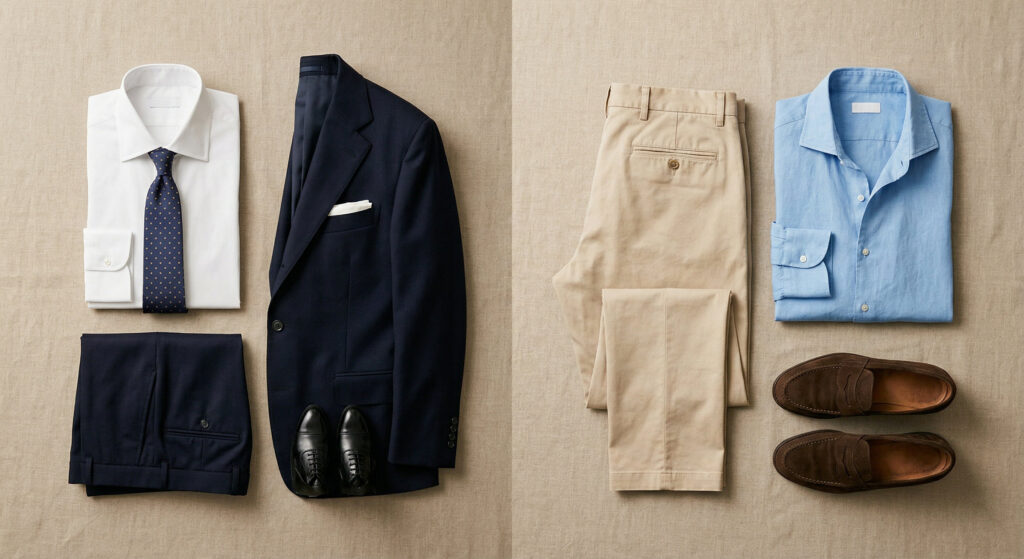
For men, business formal means a well-tailored suit in a neutral color — navy, charcoal, or dark grey are the gold standard. Black suits are acceptable but can veer into formal occasion territory, so use them sparingly in workplace settings. The suit should be paired with a crisp, pressed dress shirt in white or light blue, a silk tie (no novelty prints), and polished leather dress shoes such as Oxfords or Derbies. A leather belt should match your shoes.
Key details matter in business formal. Cufflinks, a pocket square, and dark dress socks all contribute to a finished look. Avoid suede shoes, loud patterns, short-sleeve dress shirts, and any visible casual elements like a sports watch or sneakers.
Business Formal for Women
For women, business formal includes a tailored pantsuit or skirt suit, a structured blazer paired with tailored trousers or a pencil skirt, or a formal sheath dress with a blazer. Colors should stay in conservative territory — black, navy, charcoal, and muted tones are ideal. Blouses should be modest and well-fitted.
Footwear should be closed-toe heels or flats in neutral leather. Avoid open-toe shoes, sandals, or anything overly casual. Jewelry should be understated — small earrings, a simple necklace, or a classic watch. Keep makeup and fragrance minimal and professional.
What Is Business Casual?

Business casual is a more relaxed take on workplace dressing — but “relaxed” doesn’t mean informal. It sits comfortably in the middle of the dress code spectrum: more polished than smart casual, but less rigid than business formal. Business casual is the most common dress code in modern workplaces, from tech companies and creative agencies to mid-size businesses and casual Fridays in more traditional offices.
The challenge with business casual is that it’s intentionally flexible, which can lead to confusion. The goal is to look put-together and professional without appearing overdressed.
Business Casual for Men
For men, business casual typically means chinos or tailored trousers (not jeans), a collared shirt such as a button-down Oxford or a polo, and optional blazer or sport coat. A tie is generally not required. Footwear can range from loafers and leather sneakers (clean, minimalist styles) to casual leather shoes — but athletic trainers or flip-flops are off the table.
Dark-wash jeans are often acceptable in business casual environments depending on the company culture, but this varies widely. When in doubt, leave the jeans at home until you’ve seen how colleagues dress.
Business Casual for Women
For women, business casual opens up considerably. Tailored blouses, ponte pants, chinos, midi skirts, wrap dresses, and blazers all work well. You can incorporate patterns and modest prints that you’d avoid in business formal settings. Footwear options include flats, block-heeled boots, loafers, and low heels.
Avoid overly casual items like athletic wear, crop tops, or anything sheer or revealing. Similarly, very casual fabrics like jersey or sweatshirt material tend to pull an outfit out of business casual territory even if the silhouette looks professional.
Key Differences at a Glance
| Category | Business Formal | Business Casual |
|---|---|---|
| Suits | Required (matched sets) | Optional blazer or sport coat |
| Ties (men) | Required | Not required |
| Footwear | Polished leather dress shoes only | Loafers, clean leather sneakers |
| Jeans | Never | Sometimes, if dark and tailored |
| Colors | Neutral, conservative | Broader range acceptable |
| Patterns | Minimal (subtle stripes, solids) | Modest prints allowed |
| Settings | Courtrooms, boardrooms, formal events | Most offices, interviews, client lunches |
How to Tell Which Dress Code Applies
When the dress code isn’t explicitly stated, look for context clues. Industry is one of the best indicators — finance, law, and government tend toward business formal, while technology, marketing, and creative fields lean business casual. When attending a job interview, it’s almost always safer to err on the side of business formal regardless of the company culture; you can dress down once you’re hired.
If you’re attending an in-person event or meeting and genuinely can’t determine the expected dress code, don’t be afraid to ask your host or HR contact directly. Asking shows self-awareness, not ignorance.
For additional guidance on reading workplace dress codes, the Society for Human Resource Management (SHRM) offers practical workplace professionalism resources that HR professionals and employees alike find useful.
Common Mistakes to Avoid
One of the most frequent errors people make is assuming business casual means any casual clothing. Hoodies, ripped jeans, athleisure, and graphic tees are casual — not business casual. Similarly, people sometimes over-correct in business formal settings by wearing outdated or ill-fitting suits, which can look just as unprofessional as underdressing. Fit is everything: a well-fitted business casual outfit will always outperform an ill-fitting formal one.
Another common mistake is neglecting grooming and accessories. Your outfit is only part of the equation. Scuffed shoes, wrinkled shirts, or overdone accessories can derail an otherwise appropriate look.
Final Thoughts
Understanding the difference between business formal and business casual takes some practice, but the underlying principle is straightforward: match the formality of your environment, and when in doubt, dress one level up. You’ll rarely be penalized for looking too polished, but underdressing in a professional setting can leave a lasting negative impression.
Whether you’re suiting up for a boardroom presentation or choosing a smart blazer for a casual office, investing in a few versatile, well-fitted pieces for each dress code level will serve you well throughout your career.