
There’s a fine line between a man who looks intentionally styled and one who looks like he got dressed in the dark next to a jewelry box. Accessories are one of the most powerful tools in a man’s wardrobe — but they’re also one of the easiest to get wrong. So how many accessories should a man wear at once? The honest answer: it depends on the pieces, the occasion, and how well they work together. But there are clear guidelines that will keep you on the right side of that line every time.
Why Accessories Matter in Men’s Style
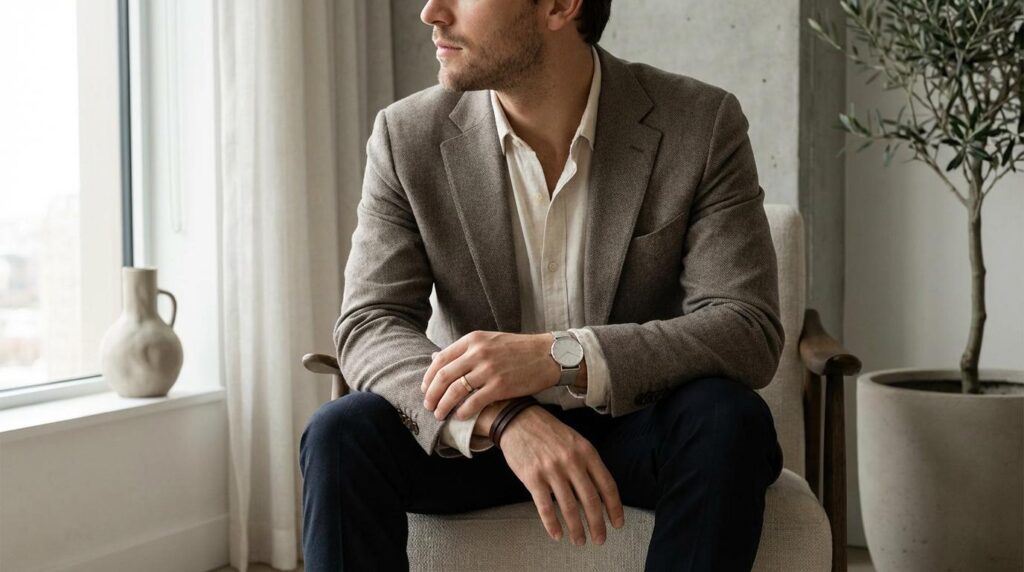
For a long time, men’s fashion was relatively limited in how much self-expression it allowed. Accessories filled that gap. A watch, a ring, a bracelet, a pocket square — these are the details that signal personality, taste, and intentionality. They elevate a basic outfit into something considered.
The problem is that more doesn’t automatically mean better. Every accessory you add competes for visual attention. When too many pieces are fighting for the eye at once, none of them win — and the overall look becomes cluttered rather than confident.

The General Rule: Three Is the Magic Number
A widely respected guideline in men’s style is to wear no more than three accessories at a time. This doesn’t mean you’re limited to exactly three — it means that three is generally the upper boundary before things start to feel overdone.
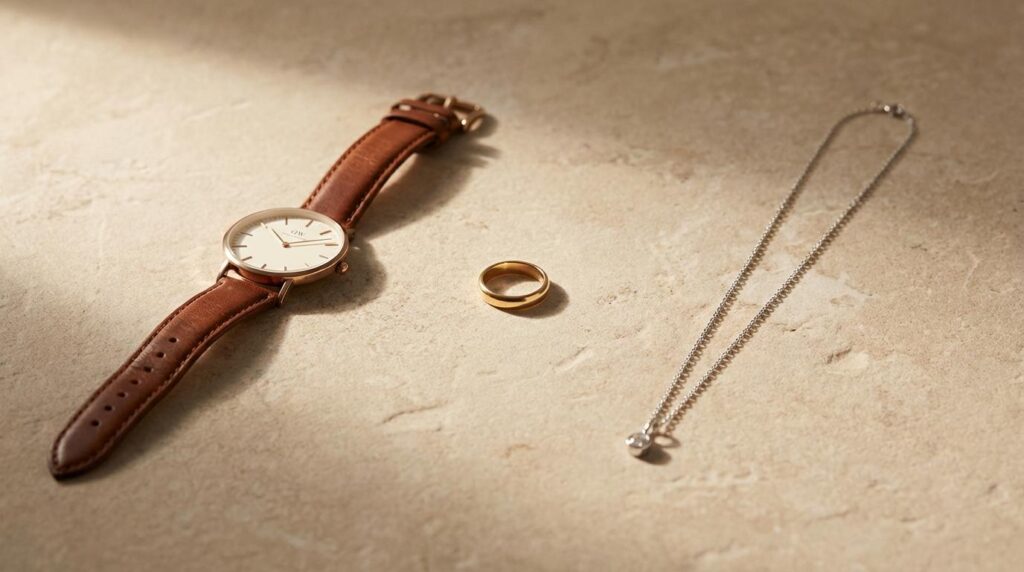
Why three? It’s enough to add depth and personality to an outfit without creating visual noise. Think of it like seasoning food: a little enhances the dish, too much overwhelms it.
Here’s what a well-balanced three-piece combination might look like:
- A classic watch + a leather belt + a pocket square
- A simple chain necklace + a signet ring + leather loafers with tassels
- A baseball cap + a bracelet + clean white sneakers
Each of these combinations has a clear focal point with supporting details — not three things all screaming for attention at the same time.
What Counts as an Accessory?
Before counting, it helps to know what qualifies. Accessories include:
- Watches — the single most universally accepted men’s accessory
- Rings — from wedding bands to signet rings to fashion rings
- Bracelets — leather, beaded, metal cuffs, or woven styles
- Necklaces — chains, pendants, dog tags
- Earrings — studs, hoops, or drops
- Belts — functional, but still a style statement
- Hats — caps, beanies, fedoras, bucket hats
- Sunglasses — a strong style signal even when worn casually
- Scarves — in cooler months, a significant visual element
- Pocket squares — a classic formal accent
- Tie clips and lapel pins — small but notable in a suited look
- Bags — tote bags, backpacks, and crossbody bags all read as style choices
Not everyone counts every item in this list the same way. A wedding band, for example, is rarely “counted” the way a fashion ring would be. Use common sense — if the item draws attention, it counts.
Dressing Up vs. Dressing Down: Context Changes Everything
The three-accessory rule isn’t rigid — context matters significantly.
Formal and Business Settings
In professional or formal environments, restraint is the default. One or two accessories is usually ideal. A dress watch and a tie clip, for instance, is a complete and polished look for a suited professional. Adding a pocket square brings it to three — already pushing the ceiling for formal wear.
The more formal the occasion, the fewer accessories you need. A black-tie event calls for nothing beyond a dress watch, cufflinks, and perhaps a simple pocket square.
Smart Casual and Everyday Wear
This is where men have the most flexibility. Smart casual outfits — think chinos, a button-down, clean sneakers — can accommodate three accessories comfortably. A watch, a simple bracelet, and a pair of sunglasses is a clean, styled combination that doesn’t feel overdressed or underdressed.
Streetwear and Fashion-Forward Looks
Streetwear operates by different rules. In this context, layering accessories more heavily can be entirely intentional and well-executed. A stacked wrist (multiple bracelets or a watch plus bracelets), a chain, and a cap can all coexist without looking chaotic — as long as they share a cohesive aesthetic.
The key in streetwear isn’t necessarily fewer pieces; it’s intentionality. The look should feel curated, not thrown together.
The Stacking Exception: When More Is More
Stacking — layering multiple bracelets or necklaces together — is a legitimate styling technique that can read as a single “unit” rather than multiple separate accessories. If you’re wearing four thin gold chains at varying lengths, that’s a stack, not four separate accessories competing for attention.
The same logic applies to rings. Wearing two or three rings on one hand can work as a deliberate style choice, especially when the metals and styles are consistent.
When stacking, keep these principles in mind:
- Vary the lengths — necklaces at different chain lengths create visual depth
- Keep metals consistent — mixing gold and silver can work, but mixing three metals rarely does
- Balance across the body — a heavily stacked wrist looks better when the rest of the accessories are minimal
Common Mistakes Men Make With Accessories
Matching Too Perfectly
Trying to match every metal, every color, and every texture can make an outfit feel overly coordinated and stiff. A little contrast is good. Your watch doesn’t need to match your belt buckle down to the millimeter.
Ignoring Proportion
A large, statement watch looks out of place with delicate chain bracelets and a slim ring. Accessories should share a general sense of scale. Bold pieces pair with bold pieces; understated pieces pair with understated pieces.
Wearing the Wrong Accessory for the Occasion
A chunky chain and beaded bracelets at a job interview will undercut the rest of your effort, no matter how good the outfit is. Context always dictates what’s appropriate.
Forgetting That Less Can Be More
Some of the most stylish men in the world wear a single, well-chosen watch and nothing else. One great accessory, worn with confidence, beats five mediocre ones every time.

How to Find Your Personal Style With Accessories
The three-accessory rule is a starting point, not a ceiling for every man. Style is personal. The goal is to look intentional — to give the impression that you chose each piece deliberately, not that you grabbed everything off the dresser on the way out the door.
A useful exercise: lay out the accessories you plan to wear before getting dressed. Look at them together. Do they share a common thread — a metal tone, a vibe, a color story? Or are they fighting each other? If the latter, edit one out.
For more guidance on building a foundational men’s accessory wardrobe, the style experts at The Modest Man offer practical, well-researched advice for men of all builds and budgets.
Final Word
So, how many accessories should a man wear at once? As a general rule, cap it at three. In formal settings, aim for one or two. In casual or streetwear contexts, you have more room to experiment — especially when stacking intentionally. The goal is always the same: every piece should feel like it belongs, and the overall look should appear considered, not crowded.
When in doubt, take one thing off. Nine times out of ten, it’s the right call.