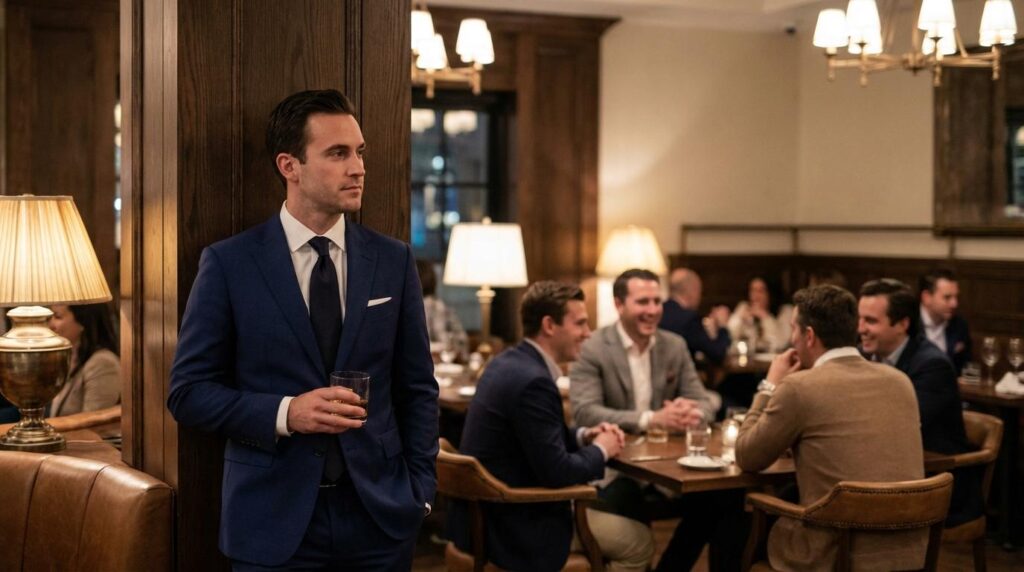
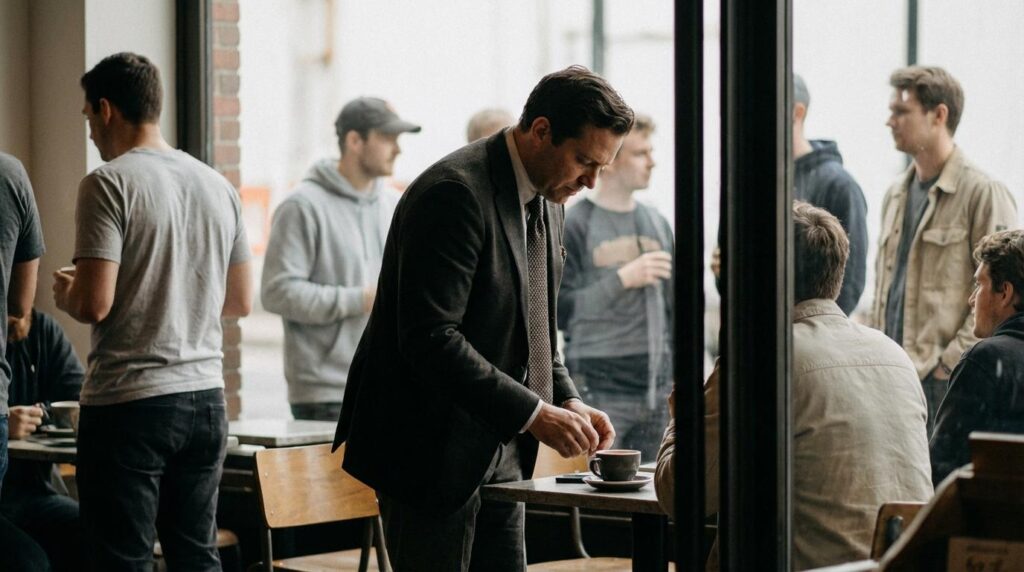
There’s a particular kind of discomfort that comes from walking into a room and immediately realizing you’ve misjudged the dress code. Whether you’ve shown up in a suit to a backyard barbecue or worn a tie to a casual Friday office, being overdressed carries its own social awkwardness. But what exactly is considered overdressed for men — and is it ever actually a problem?
The short answer is yes, overdressing is a real style misstep, and it’s more nuanced than simply wearing too many clothes. Understanding where the line is, and when it’s okay to cross it, is one of the more practical style skills a man can develop.
What Does “Overdressed” Actually Mean?
Being overdressed means wearing clothing or accessories that are significantly more formal than what the situation, setting, or dress code calls for. It’s not about looking too good — it’s about being misaligned with your environment.

A tuxedo at a bowling alley is overdressed. A three-piece suit at a college tailgate is overdressed. A dress shirt and blazer at a pool party is overdressed. In each case, the issue isn’t the quality or condition of the clothing — it’s that the formality level is completely at odds with the context.
Overdressing can send unintended social signals. It can read as oblivious, out of touch, or even condescending — as if you either didn’t know or didn’t care what the occasion actually called for. In social settings, it creates distance. In professional settings, it can occasionally suggest poor judgment or a lack of cultural awareness about the environment.
The Most Common Situations Where Men Overdress
Casual Social Gatherings
House parties, backyard cookouts, casual dinners at a friend’s place, birthday celebrations at a bar — these are low-formality environments. Showing up in a suit, dress shirt, or even smart dress trousers when everyone else is in jeans and sneakers puts you out of step with the room.
In these settings, smart casual is almost always the ceiling. Dark jeans, a clean fitted t-shirt or casual button-down, and neat casual footwear is the appropriate range. Going above that signals a misread of the invitation.
The Workplace
Office dress codes vary enormously by industry. In a creative agency, a law firm, a tech startup, and a financial institution, “appropriate” means four completely different things. A man who shows up in a full suit and tie to a startup where everyone wears jeans and hoodies isn’t demonstrating professionalism — he’s demonstrating that he hasn’t read the room.
This is particularly relevant for job interviews. The common advice used to be “always overdress for an interview,” but that guidance has become more nuanced. Showing up in a three-piece suit with a pocket square to interview at a casual tech company can actually work against you by suggesting you don’t understand the company’s culture.
Dates and Romantic Settings
First-date nerves sometimes push men toward overdressing as a way of showing effort. Wearing a suit jacket and dress shoes to a casual coffee date or a low-key restaurant can make the other person feel underdressed and create unnecessary tension. Effort and formality are not the same thing. A well-fitted casual outfit shows as much care as a suit — sometimes more, because it signals you understood the setting.
Daytime Events
Brunches, outdoor festivals, farmers markets, casual daytime weddings in relaxed settings — these contexts are typically smart casual at most. Heavy suiting, formal dress shoes, or black-tie adjacent clothing in bright daylight almost always reads as overdressed, regardless of how well-chosen the individual pieces are.
Specific Clothing Items That Tend to Overdress an Outfit
Some items carry so much formality that they’re difficult to dress down without losing the battle entirely:
- Ties — in any setting that isn’t business formal or a formal event, a tie immediately elevates an outfit beyond what most casual and semi-casual situations call for
- Tuxedos and morning suits — reserved for black-tie or white-tie occasions only; wearing either outside that context is almost always overdressed
- Pocket squares — a well-folded pocket square in a casual setting can push a look from smart casual into overly formal territory
- Oxford cap-toe dress shoes — the most formal shoe in a man’s wardrobe; pairing them with anything casual creates an imbalance that reads as overdressed
- Double-breasted suits — inherently more formal than single-breasted cuts; they require a more formal setting to feel appropriate
- Cufflinks — unless you’re wearing a French-cuff shirt at a formal event, cufflinks can feel like too much in most everyday settings
Is It Ever Okay to Be the Best-Dressed Man in the Room?
Yes — and this distinction matters. There is a difference between being overdressed and being the best-dressed. Being the best-dressed means your outfit is more polished, better fitted, or more thoughtful than others in the room, but still within the appropriate formality range. Being overdressed means you’re outside that range entirely.
A man in a perfectly fitted blazer, dark chinos, and clean leather sneakers at a casual dinner isn’t overdressed — he’s just dressed well. A man in a tuxedo at that same dinner is overdressed.
There’s no shame in being the sharpest-looking person in a casual room, as long as your formality level is still appropriate. Aim to be the best-dressed within the dress code, not above it.
How to Read a Dress Code and Get It Right
Decode the Invitation
Dress codes on invitations use specific language for a reason. “Black tie” means tuxedo. “Cocktail attire” means dark suit and tie. “Smart casual” means elevated casual — no suits, no sneakers. “Casual” means relaxed, comfortable clothing with care taken in fit and condition. When in doubt, the invitation’s language is your clearest guide.
Research the Venue
The location tells you a lot. A rooftop bar operates differently than a five-star restaurant. A beach wedding calls for different attire than a cathedral ceremony. Google the venue, look at photos, and use that context to calibrate.
Ask the Host
If you genuinely don’t know, ask. There’s no social penalty for a quick message to the host asking what people will generally be wearing. It shows consideration, not confusion.
When Uncertain, Aim One Step Above Casual
If you’re truly unsure, the safest position is smart casual — one level above fully casual, one level below business casual. This middle ground rarely reads as overdressed or underdressed in most social contexts.
How to Dress Down Without Looking Sloppy
Sometimes you have an instinct to dress up and need to dial it back. Here’s how to do it without sacrificing style:
- Swap dress shoes for clean leather sneakers or loafers — this single change can drop the formality of an outfit significantly
- Leave the tie at home — an open collar on a dress shirt reads as smart casual, not formal
- Choose a sport coat over a suit jacket — less structured, less formal, still elevated
- Opt for chinos or dark jeans instead of dress trousers — the silhouette stays clean while the formality drops
- Remove the pocket square — a small edit that meaningfully reduces the formal read of a blazer-based outfit
For a practical breakdown of dress codes and how to navigate them by occasion, the guides at Gentleman’s Gazette are among the most thorough and well-researched available.
Final Word
What is considered overdressed for men comes down to one central question: does your formality level match the occasion? When the answer is no — when you’re wearing a suit to a cookout or a tuxedo to a casual dinner — you’re overdressed. The fix isn’t to stop caring about how you look. It’s to direct that care toward reading the room as carefully as you read the label.
Dressing well isn’t about wearing the most formal thing you own. It’s about wearing the right thing for the moment — and doing it with intention.